

When it comes to providing convenient and hygienic sanitation solutions, toilet trailers have become an essential asset for various events, construction sites, and outdoor gatherings. As a leading toilet trailer supplier, I often receive inquiries about the height clearance needed for these units. Understanding the appropriate height clearance is crucial for ensuring safe transportation, installation, and use of toilet trailers. In this blog post, I will delve into the factors that influence the required height clearance and provide some guidelines to help you make informed decisions.
Factors Affecting Height Clearance
Trailer Design and Dimensions
Toilet trailers come in various sizes and configurations, each with its own unique height specifications. The overall height of a trailer is determined by several factors, including the height of the chassis, the height of the superstructure (the part of the trailer that contains the restroom facilities), and any additional features such as air conditioning units or ventilation systems. For example, a Portable Toilet Trailer with a single stall may have a lower height compared to a 4-stall Portable Toilet Trailer, which requires more space to accommodate multiple fixtures and amenities.
Transportation Considerations
One of the primary reasons for considering height clearance is the transportation of the toilet trailer. When moving a trailer from one location to another, it must be able to pass under bridges, overpasses, and other overhead structures without getting damaged. The height of the trailer should be within the legal limits set by local transportation authorities. In the United States, for example, the maximum height for most commercial vehicles, including trailers, is typically 13 feet 6 inches (4.11 meters). However, these limits can vary depending on the state and the specific route being taken.
Installation and Site Requirements
In addition to transportation, the height clearance is also important for the installation and operation of the toilet trailer at the intended site. The trailer must be placed on a level surface with enough clearance above it to allow for proper ventilation and maintenance. If the trailer is installed in an area with low ceilings or overhead obstacles, it may be difficult to access the roof for tasks such as cleaning the ventilation system or making repairs. Furthermore, the height clearance should be sufficient to prevent any interference with the opening and closing of doors and windows.
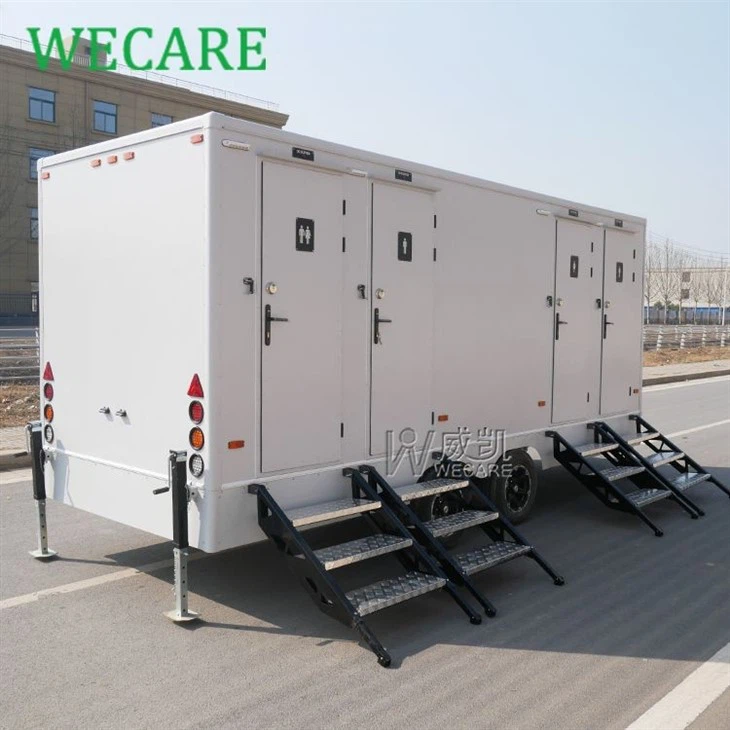
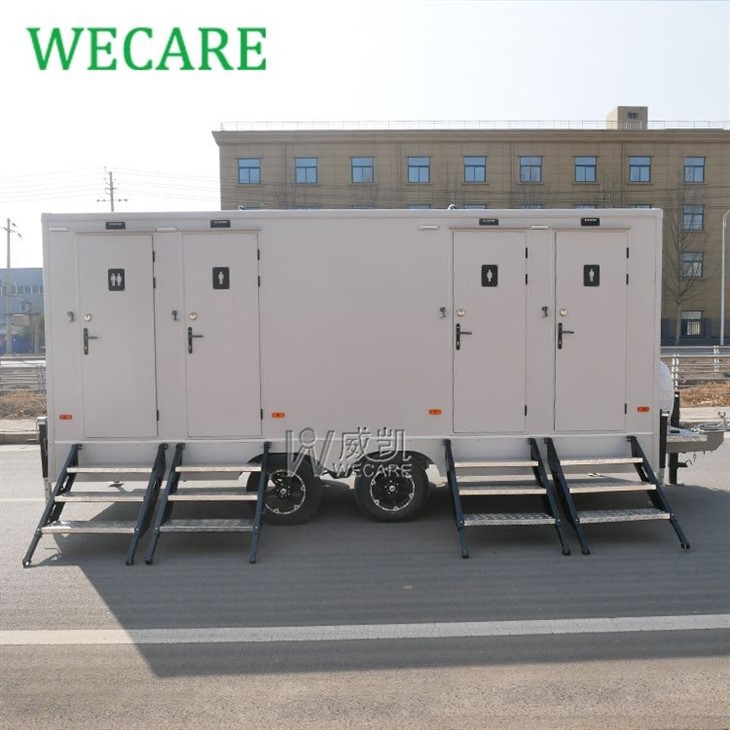
Recommended Height Clearance Guidelines
Based on my experience as a toilet trailer supplier, I recommend the following height clearance guidelines to ensure the safe and efficient use of these units:
Transportation
- Minimum Clearance: When transporting a toilet trailer, it is recommended to have a minimum clearance of at least 14 feet (4.27 meters) above the trailer. This additional clearance provides a buffer to account for any variations in road conditions, such as bumps or uneven surfaces, that may cause the trailer to bounce or sway slightly.
- Route Planning: Before transporting a toilet trailer, it is essential to plan the route carefully and check the height of all bridges, overpasses, and other overhead structures along the way. You can use online mapping tools or contact local transportation authorities to obtain this information. If you encounter any low-clearance areas, you may need to find an alternative route or make arrangements to have the trailer transported by a specialized carrier with the necessary equipment to navigate these obstacles.
Installation
- Indoor Installation: If you are installing a toilet trailer indoors, such as in a warehouse or event venue, the minimum height clearance should be at least 10 feet (3.05 meters) above the trailer. This clearance allows for proper ventilation and access to the roof for maintenance purposes. However, if the trailer is equipped with a high-performance ventilation system or other tall features, you may need to increase the clearance accordingly.
- Outdoor Installation: For outdoor installations, the height clearance requirements are generally less restrictive. However, it is still important to ensure that there is enough space above the trailer to prevent any interference with nearby trees, power lines, or other structures. A minimum clearance of 8 feet (2.44 meters) is typically sufficient for most outdoor applications.
Conclusion
In conclusion, the height clearance needed for a toilet trailer depends on several factors, including the trailer design, transportation requirements, and installation site. By considering these factors and following the recommended guidelines, you can ensure that your toilet trailer is safely transported, installed, and operated. As a toilet trailer supplier, I am committed to providing high-quality products and expert advice to help you choose the right unit for your needs. If you have any questions or need further assistance, please do not hesitate to contact me. I look forward to working with you to provide the best sanitation solutions for your next event or project.
References
- American Association of State Highway and Transportation Officials (AASHTO). (2021). A Policy on Geometric Design of Highways and Streets.
- Federal Highway Administration (FHWA). (2021). Maximum Height and Width of Commercial Motor Vehicles.
- National Fire Protection Association (NFPA). (2018). NFPA 101: Life Safety Code.


